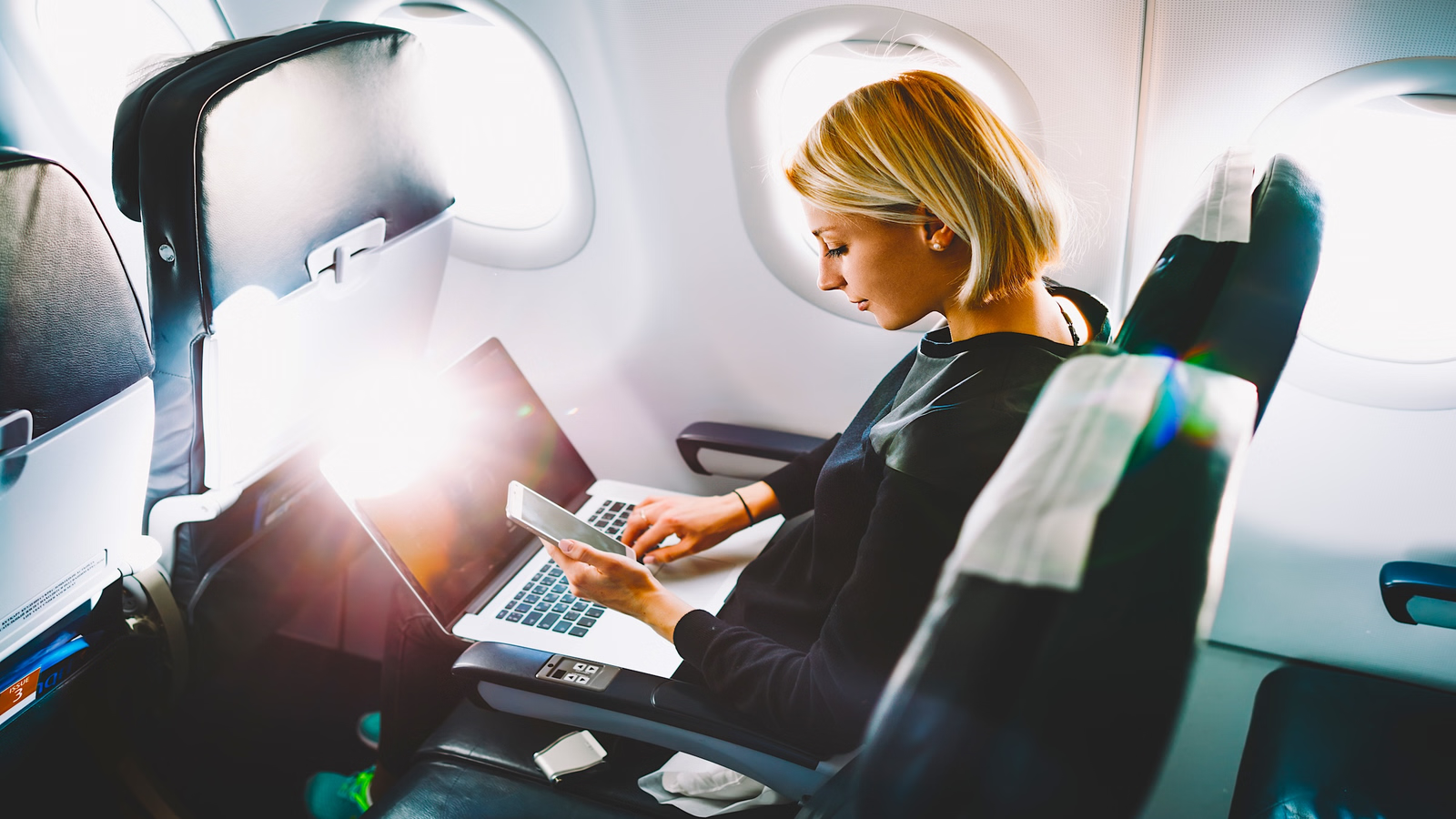
Staying connected has become an essential part of travel—and most air passengers now carry multiple devices, including phones, tablets, and laptops. But keeping them charged has become a major challenge, as airport outlets are in high demand. This is why many travelers rely on external power banks to stay powered up throughout their journey.
However, lithium-ion batteries, the technology inside these portable chargers, have recently been placed under scrutiny. In 2016, Samsung recalled its Galaxy Note7 smartphones after overheating batteries caused fires, leading to a complete ban of the devices on planes. The same type of battery powers today’s external chargers. Just this past July, Anker recalled five different power bank models, affecting over 1.1 million units. Weeks later, officials linked a fire in a Virgin Airlines overhead bin to a portable battery.
Although the Transportation Security Administration (TSA) already specifies that power banks should be placed only in carry-on bags, the surge in incidents involving overheating lithium-ion batteries has prompted airlines to tighten their own rules. Many U.S. travelers now find themselves scrambling to keep up with shifting policies, especially on international flights.
Here’s what’s changing on specific airlines and how passengers are reacting.
Airline Rules For Passenger Power Bank Use Are Changing
Policies on using power banks to keep devices charged during mid and long-haul flights are becoming stricter. Travelers who have relied on portable chargers are now stuck piecing together the inconsistency on international and some domestic flights.
According to the travel management company, FCM Travel, several new restrictions have been announced recently.
However, lithium-ion batteries, the technology inside these portable chargers, have recently been placed under scrutiny. In 2016, Samsung recalled its Galaxy Note7 smartphones after overheating batteries caused fires, leading to a complete ban of the devices on planes. The same type of battery powers today’s external chargers. Just this past July, Anker recalled five different power bank models, affecting over 1.1 million units. Weeks later, officials linked a fire in a Virgin Airlines overhead bin to a portable battery.
Although the Transportation Security Administration (TSA) already specifies that power banks should be placed only in carry-on bags, the surge in incidents involving overheating lithium-ion batteries has prompted airlines to tighten their own rules. Many U.S. travelers now find themselves scrambling to keep up with shifting policies, especially on international flights.
Here’s what’s changing on specific airlines and how passengers are reacting.
Airline Rules For Passenger Power Bank Use Are Changing
Policies on using power banks to keep devices charged during mid and long-haul flights are becoming stricter. Travelers who have relied on portable chargers are now stuck piecing together the inconsistency on international and some domestic flights.
According to the travel management company, FCM Travel, several new restrictions have been announced recently.
Which Airlines Have Changed Their Power Bank Rules?
| Airline | Can Be Used For Charging | Allowed In Checked Baggage | Where To Store | Capacity Limit |
|---|---|---|---|---|
| Singapore Airlines | Not allowed | Not allowed | Cabin only | Up to 100Wh; approval required for 100Wh-160Wh |
| Fly Scoot | Not allowed | Not allowed | Cabin only | Up to 100Wh; approval required for 100Wh-160Wh |
| AirAsia | Not allowed | Not allowed | Under seat or seat pocket only | Up to 100Wh; approval required for 100Wh-160Wh |
| Malaysia Airlines (incl. Firefly & MASwings) | Not allowed | Not allowed | Under seat or seat pocket only | Up to 100Wh; approval required for 100Wh-160Wh |
| Cathay Pacific | Not allowed | Not allowed | Under seat only | Up to 160Wh |
| China Airlines | Not allowed | Not allowed | Avoid overhead | Up to 100Wh; approval required for 100Wh-160Wh |
| Hong Kong Airlines | Not allowed | Not allowed | Under seat only | Up to 160Wh |
In addition to the airlines listed by FCM Travel, a few others have recently changed or will soon change their policies. Emirates, the largest airline in the Middle East, plans to roll out a new policy in October prohibiting passengers from using power banks during flights. Travelers will be required to turn off these devices and store them either in the seat pocket or beneath the seat in front of them, rather than leaving them plugged in.
In South Korea, officials have gone further by imposing nationwide restrictions on in-flight charging and banning passengers from placing power banks in overhead bins altogether.
Meanwhile, Southwest Airlines recently became the first carrier in the U.S. to introduce a rule requiring passengers to keep power banks and other portable charging devices in plain sight while in use.
U.S. Travelers Are Scrambling To Understand Each Airline’s Rules And Bans
In recent months, Reddit has seen an increasing number of posts from U.S. travelers asking about new rules and bans surrounding power banks on flights. One traveler posted about reports of the TSA confiscating portable chargers.
“[In] the last week, I have seen several articles about TSA and airlines getting more restrictive about lithium-ion batteries, specifically power banks, with TSA supposedly confiscating them at some airports if they are too large or not labeled properly. Thoughts? Anyone here have a power bank confiscated?” wrote the traveler.
Other commenters shared their own experiences. One said their power bank had been confiscated in China, while another noted they had flown through numerous airports without issues until reaching Beijing.
| They wrote: |
|---|
| “I flew out of Beijing on Air China recently, and they were fanatical about batteries. Every single external battery was heavily scrutinized. I saw a gal with a battery so tiny that it [was] attached to the back of her smartphone, but because the technical specs info had been rubbed off and was unreadable, Security confiscated it and threw it into a bin that had dozens of batteries in it.” |
| “I’ve just had my 20,000 mah power bank confiscated departing Beijing airport. I’ve had it for ages, like maybe 6-7 or more years. Taken it with me on every single flight I’ve been on, and I’m just wrapping up 3 months [of] travel in Central America and two stops in the USA, where I had it with me every single flight.” |
In the United States, while the TSA website does not explicitly state that such items will be confiscated, it does caution that “The final decision rests with the TSA officer on whether an item is allowed through the checkpoint.”
Because airlines and international destinations can have widely differing rules on power banks, the safest approach is to research your specific airline and route before arriving at the airport.
Karla Demery thetravel.com